
Key Takeaways
- Discover the structural differences between these two premium textiles to find the perfect fit for your climate, storage space, and daily routine
Cotton Bath Towels vs. Turkish Towels: Which is Better?
When it comes to upgrading your bathroom linens, the choices can feel overwhelming. You want something that looks beautiful hanging on a towel rack, feels great against your skin, and performs well day after day. In the debate over premium bath linens, two distinct styles consistently dominate the conversation: traditional cotton bath towels and flat-weave Turkish towels. While both options are technically made from cotton, their origins, manufacturing processes, weaves, and daily performance are entirely different. Deciding which is "better" ultimately comes down to your personal lifestyle, the climate you live in, and how you prefer your post-shower experience.
This comprehensive guide will break down the exact differences between standard cotton bath towels and Turkish towels to help you make an informed decision for your home.
Understanding Standard Cotton Bath Towels :
When you picture a classic, fluffy towel, you are visualizing a traditional cotton bath towel. These are the ubiquitous, plush linens found in most homes and luxury hotels around the world.
The Manufacturing and Weave :
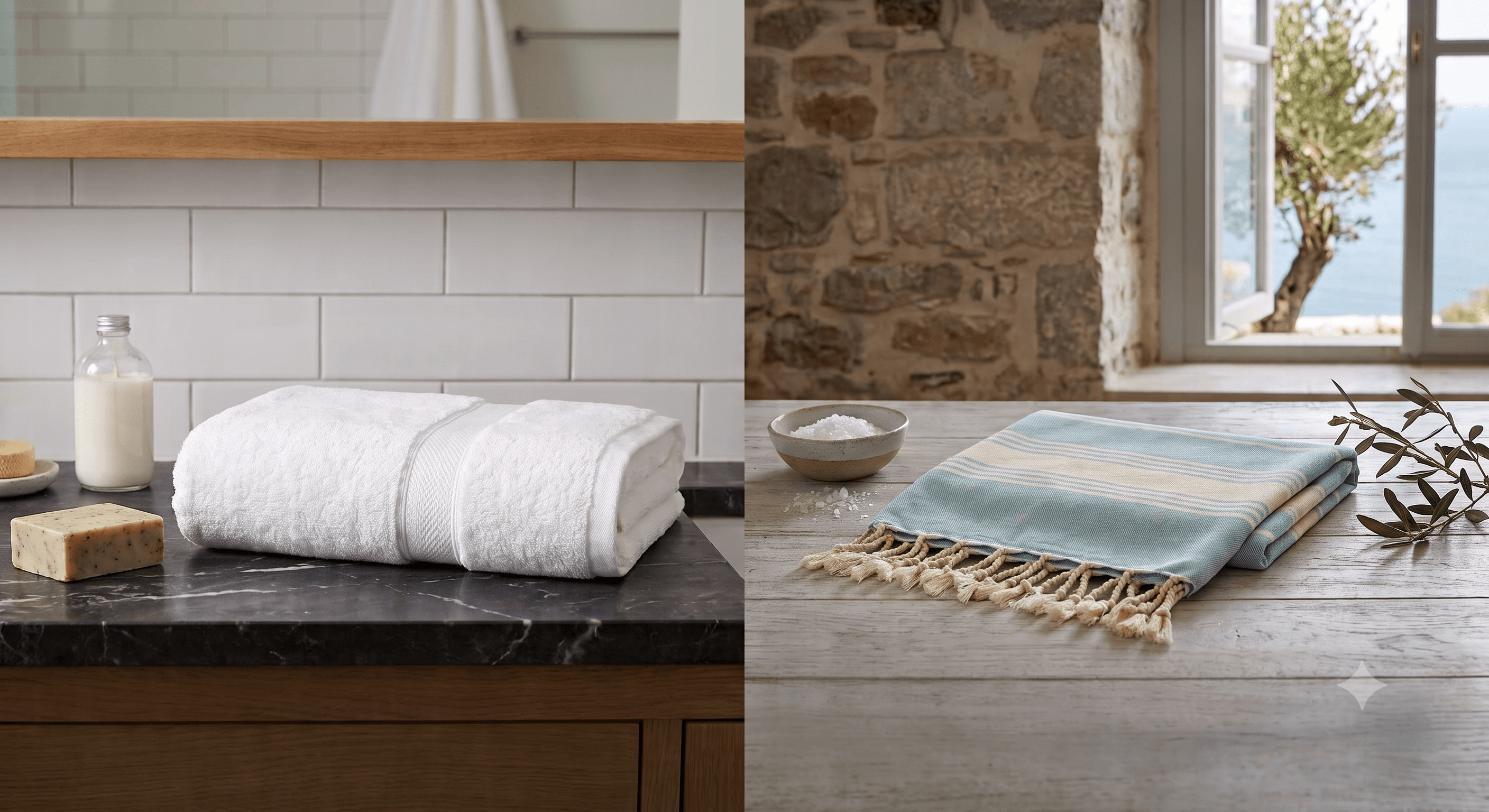
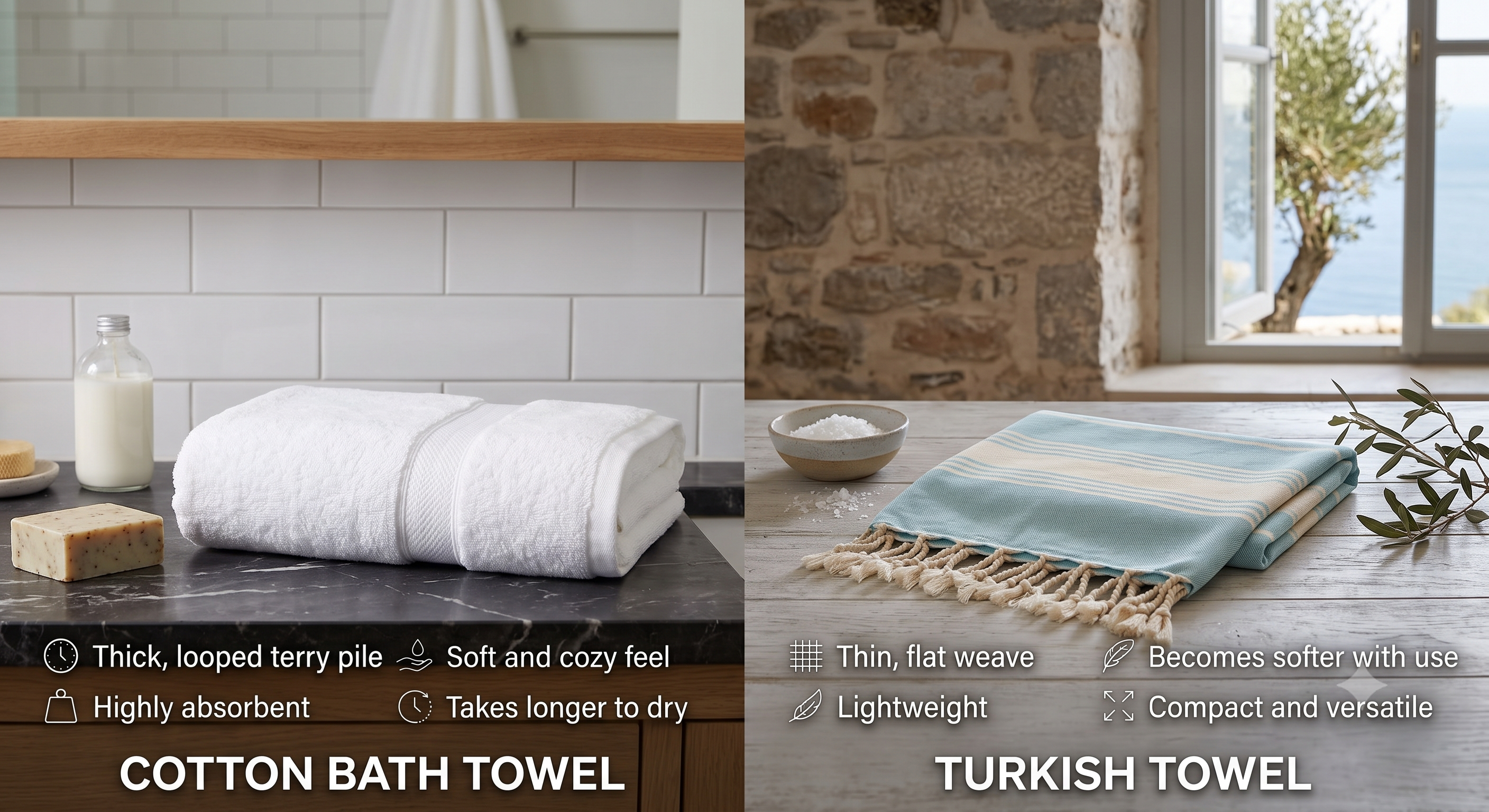
Standard cotton bath towels are typically constructed using a terry cloth weave. This weaving process creates thousands of tiny, uncut loops of yarn that stand up from the base fabric. These loops act like miniature sponges, exponentially increasing the fabric's surface area.
Standard cotton towels are measured by GSM (Grams per Square Meter). A higher GSM (usually between 500 and 800) indicates a thicker, heavier, and more absorbent towel.
Pros of Cotton Bath Towels :-
Maximum Plushness: The terry cloth loops provide a thick, cocoon-like feel. If you love wrapping yourself in a heavy, warm blanket after a cold shower, a high-GSM cotton towel delivers that exact experience.
Immediate Absorbency: Because of the deep pile and thousands of loops, traditional cotton towels absorb a massive volume of water almost instantly upon making contact with your skin.
Warmth: The sheer thickness of a traditional terry towel retains heat, making them ideal for cold winter mornings.
Cons of Cotton Bath Towels :-
Slow Drying Time: The very same loops that trap water so well also hold onto it. Heavy cotton towels take significantly longer to air-dry.
Prone to Musty Odors: In humid climates or poorly ventilated bathrooms, the slow drying time can lead to the growth of bacteria, resulting in a damp, musty smell.
Bulky: They take up a lot of space in your linen closet, washing machine, and gym bag.
Understanding Turkish Towels :
Turkish towels—also historically known as hammam towels, peshtemals, or foutas—have been used in traditional Anatolian public baths for centuries. Recently, they have seen a massive surge in global popularity as an aesthetically pleasing, highly functional alternative to heavy terry cloth.
The Manufacturing and Weave :
The defining characteristic of a true Turkish towel is the material: Turkish cotton. Grown exclusively in the Aegean region, this cotton features an "extra-long staple" (meaning the individual cotton fibers are naturally longer than standard cotton). Unlike the looped terry cloth, Turkish towels use a flat weave. They are incredibly thin, lightweight, and smooth, often featuring decorative fringed edges and woven patterns.
Pros of Turkish Towels : -
Extremely Fast Drying: Because they lack the deep loops of a terry weave, Turkish towels release moisture into the air rapidly. They can air-dry in a fraction of the time it takes a standard towel, making them virtually immune to musty odors.
Durability and Lifespan: The extra-long staple cotton means fewer joints or seams in the yarn. This makes the fabric incredibly strong and less prone to pilling or tearing.
Gets Softer with Age: While standard cotton towels often become stiff over time, the long fibers of Turkish cotton actually open up and become softer, fluffier, and more absorbent with every trip through the washing machine.
Highly Versatile and Compact: They fold down to a fraction of the size of a standard towel. This makes them the ultimate multi-purpose linen: they excel as gym towels, beach wraps, travel blankets, or stylish bathroom decor.
Cons of Turkish Towels : -
Different Sensory Experience: They do not offer the thick, plush "hug" of a traditional towel. For those accustomed to heavy terry cloth, a Turkish towel can initially feel too thin or akin to drying off with a blanket.
Initial Absorbency: While they hold a surprising amount of water, they require a bit of "breaking in." A brand new Turkish towel needs to be washed a few times before its fibers fully open up to reach maximum absorbency.
The Head-to-Head Comparison :
To determine which towel is right for you, let’s look at how they perform against each other in key daily scenarios.
1. Absorbency vs. Drying Speed
If you want to be bone-dry the second the towel touches your skin, a standard cotton bath towel wins. However, you pay the price in drying speed. If you live in a humid, tropical environment where thick towels stay damp for days, a Turkish towel is infinitely better. It will dry you off effectively and then dry itself off rapidly, preventing bacterial buildup.
2. Space and Storage
If you live in an apartment with a tiny linen closet, or if you are constantly doing laundry for a large family, Turkish towels are a game-changer. You can fit three or four Turkish towels in the space of a single plush terry towel. They also require significantly less water and energy to wash and dry, making them a more eco-friendly option for daily laundry.
3. The Aesthetic and Feel
The choice here is purely subjective. If you want your bathroom to feel like a traditional five-star luxury hotel, thick white terry cotton towels are the classic choice. If you prefer a bohemian, modern minimalist, or airy spa aesthetic, the flat weave and fringed edges of a Turkish towel will elevate your decor perfectly.
Care and Maintenance Differences : -
Both types of towels require proper care to maintain their integrity, but their needs differ slightly:
Caring for Standard Cotton: Avoid fabric softeners at all costs, as they coat the terry loops in a waxy residue that destroys absorbency. Wash on warm and ensure they are completely dry before folding to prevent mildew.
Caring for Turkish Towels: Wash them on a gentle cycle. You can actually soak a new Turkish towel in cold water for 12 hours before its first wash to "train" the cotton fibers to open up, instantly maximizing its softness and absorbency. They require very little time in the dryer and are best left to air-dry.
Final Verdict: Which is Better?
There is no undisputed winner in the battle between cotton bath towels and Turkish towels; the "best" towel is the one that solves your specific household needs.
You should choose standard Cotton Bath Towels if:
You live in a dry, cool climate.
You crave the heavy, plush, enveloping feel of a traditional hotel towel.
You have ample storage space and well-ventilated bathrooms.
You should choose Turkish Towels if:
You live in a humid or damp climate where towels struggle to dry.
You want a multi-purpose towel for the gym, beach, and travel.
You prefer a minimalist aesthetic and want to save space in your washing machine and linen closet.
Many modern homes find success by utilizing both: keeping plush cotton bath towels for the master suite during winter months, and transitioning to fast-drying Turkish towels for guest bathrooms, humid summers, and active lifestyles.